What Makes Taroudannt's Souks Different
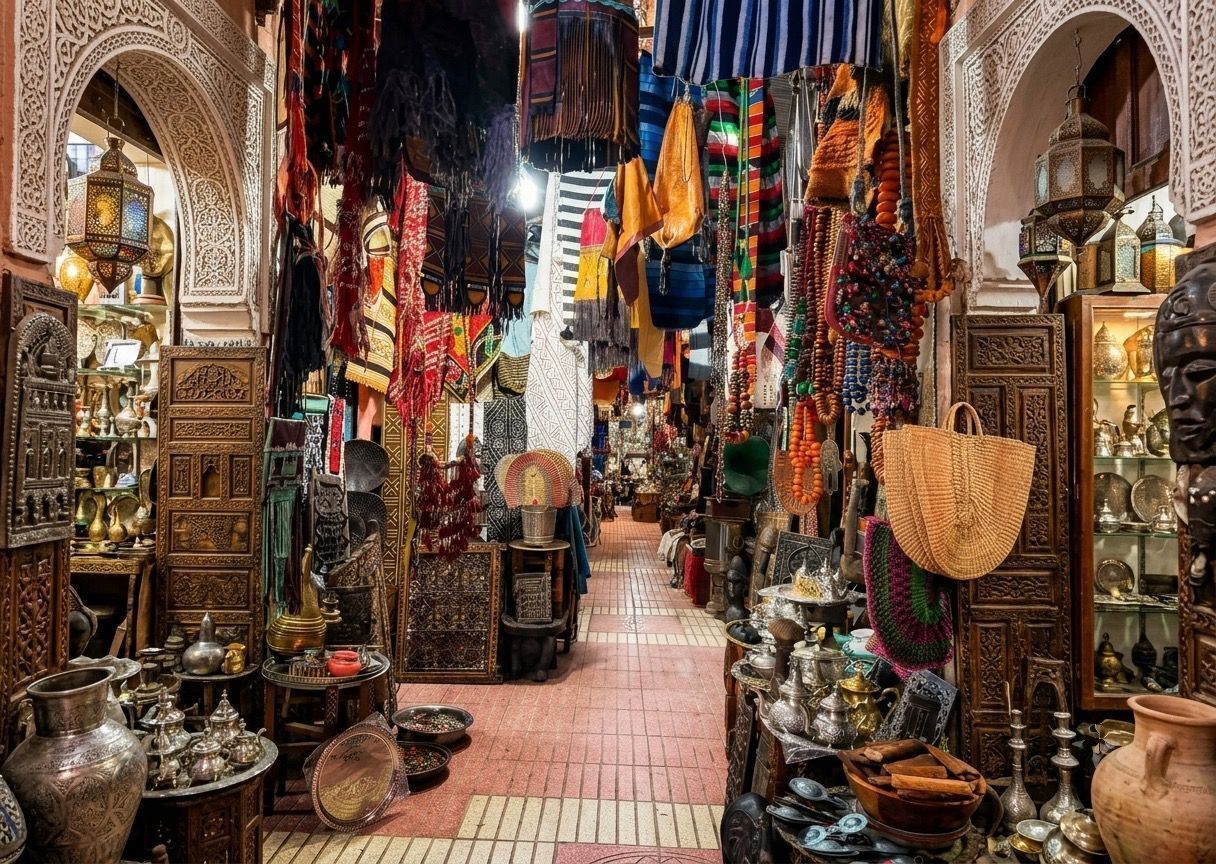
The souks of Marrakech and Fès are extraordinary but they have adapted to tourism in ways that can make the experience feel managed — aggressive touts, inflated fixed prices, goods imported from elsewhere and sold as local. Taroudannt's market is different because the customer base is still overwhelmingly local. Traders are selling to Berber farmers, to families from the Souss Valley, to school suppliers and building contractors. You are a guest in a real market, not a visitor to a tourist attraction.
The consequence is that prices are lower, quality is often higher, and the interactions are more genuine. A silversmith will show you how he sets stone not because he's trained to keep you in the shop longer, but because he's proud of his work and genuinely curious about where you're from.
The Main Market Areas
Place Assarag and Place Talmoktar
The two main squares are the heart of Taroudannt's commercial life. Place Assarag is the larger — a wide space surrounded by cafés, money changers, a few souvenir shops aimed at visitors, and the gateways into the deeper medina. Place Talmoktar, slightly further west, is more local: hardware shops, tailors, phone repair stalls and the city's central mosque.
Both squares are alive from early morning until around 8pm. The café terraces on Assarag are excellent places to sit, watch the world pass and plan your route into the souks.
The Berber Market (Tuesday and Thursday)
Taroudannt's twice-weekly rural market draws farmers and traders from villages across the surrounding mountains and plains. It sets up near the eastern gates and spills into the surrounding streets — a vast and slightly chaotic assembly of produce, livestock, dried herbs, second-hand tools and crafts. The market begins at dawn and winds down around noon.
This is where you find the Taroudannt that existed before tourism: old women selling wild honey, farmers haggling over goats, herbalists with sacks of remedies whose names you'll never remember. Bring cash, bring your camera (ask before photographing people), and arrive before 8am for the best experience.
What to Buy in Taroudannt
Argan Oil
The Souss Valley is the world's only natural habitat of the argan tree, and Taroudannt is one of the best places to buy pure argan oil directly from the women's cooperatives that produce it. Look for cooperatives run by coopératives féminines — they appear near the market areas and offer both culinary argan oil (nutty, used for cooking and as a condiment) and cosmetic argan oil (used for skin and hair). Buy only cold-pressed, unroasted oil for cosmetic use; roasted oil is the culinary version.
A 100ml bottle of genuine single-estate argan oil costs 60–100 MAD (€5–9) from a cooperative. If someone offers it for significantly less, it has been diluted.
Silver Jewellery
Taroudannt is one of Morocco's great silversmithing centres. The jewellery quarter runs off the eastern side of Place Assarag and contains dozens of workshops where craftsmen hammer, file and set stones by hand. The designs are Soussi Berber — geometric, bold, heavy — and very different from the ornamental Arab-influenced pieces you find in Fès or Marrakech.
Look for pieces marked 925 (sterling silver) or ask to see the hallmark. Genuine Berber silver is always heavier than it looks — if a piece feels light, it's not silver. Rings, bracelets and fibulas (traditional cloak pins) are the best buys.
Leather Goods
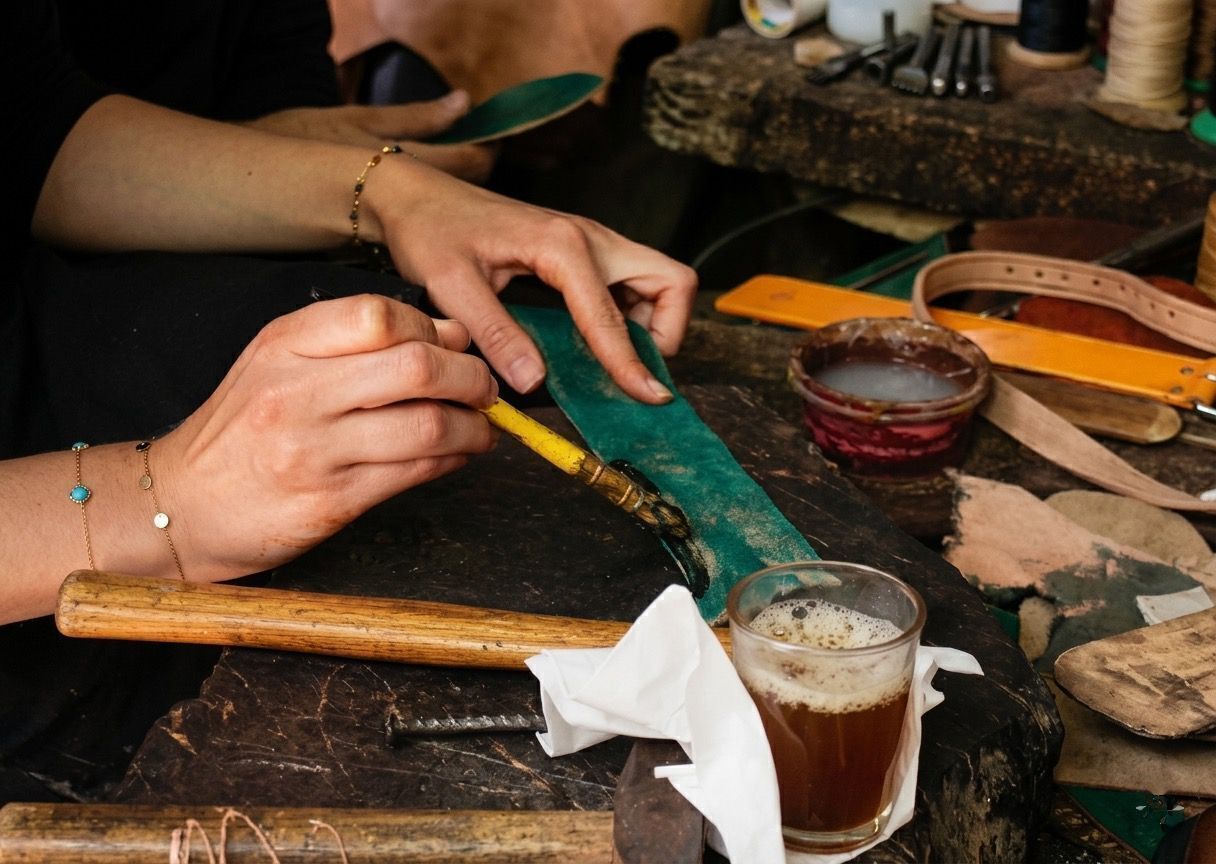
Taroudannt has a working tannery and leather quarter that produces babouche slippers, bags, belts and pouches using traditional vegetable-tanning methods. The leather has a distinctive warm smell and develops a beautiful patina with age. For the full experience, book our leather workshop — you'll make your own piece and come away understanding exactly what you're paying for in the shops.
Spices
The spice section of the souk clusters around a set of low-ceilinged lanes east of the main square. Spice merchants display their goods in great mounds of colour — saffron, turmeric, ras el hanout, dried rose petals, black cumin, dried ginger. Buy saffron only from established traders who let you smell the threads — genuine Moroccan saffron has an unmistakeable dense, sweet-metallic scent. The pre-packaged bags near the tourist entry points are usually of lower quality.
Pottery and Ceramics
Soussi pottery has a distinctive aesthetic — mostly terracotta with geometric Berber motifs in black, white and red — that is entirely different from the blue-and-white Fassi pottery you see everywhere. Tagines, serving bowls and decorative pieces are all available. They're heavy to carry but the quality is excellent and prices are a fraction of what you'd pay in a Marrakech boutique.
How to Bargain
Bargaining is expected for most goods except food staples. A few principles:
- The first price is almost never the final price, but it's rarely as inflated as in tourist-heavy cities. A 20–30% reduction is achievable; 50% off usually means the quality is questionable.
- Walking away is always an option and often results in a better offer. But if a trader comes down to your price, buy the thing — walking away after reaching an agreement is considered rude.
- Having tea with a merchant is normal and carries no obligation to buy. Enjoy it.
- Don't bargain for food, snacks or at simple café counters — fixed prices apply.
The best time to bargain is in the late afternoon when traders have had a slow day and are more willing to close a sale. The worst time is 10am when the market is busy and sellers have plenty of other customers. Have a rough sense of what you're willing to pay before starting the negotiation.
Practical Tips
- Cash is king. Very few stalls accept cards. ATMs are available near Place Assarag but queues can be long on busy days — withdraw what you need the evening before.
- Bring a bag. You will buy more than you expect to.
- Avoid guides who approach you unsolicited. They earn commissions from shops and will steer you away from the best-value places. Our guided city tour uses local guides who are paid by us, not by merchants.
- Morning for the Berber market, afternoon for craft shopping. The sequence works perfectly — busy, chaotic, authentic in the morning; relaxed and browsable in the afternoon.
Shipping Purchases Home
For larger purchases — carpets, ceramics, larger silver pieces — most established traders can arrange shipping. The Taroudannt post office (PTT) is reliable for smaller parcels. DHL has an agent near the main square for valuable items.